Farms and ag operations near Lake Charles need one toilet per 20 hand-labor workers within a quarter mile walk, per OSHA 1928.110, plus potable water and a handwashing setup. Lake Charles Porta Pros sets up standard units, handwash stations and holding tanks across fields, barns and packing sheds, priced from $100 a day.
OSHA 1928.110 covers field sanitation for hand-labor agricultural work. It calls for potable water, toilet facilities and handwashing, and the toilets have to sit within a quarter mile of wherever crews are working, or be reachable within a reasonable walk if terrain makes distance measurement impractical. That is different from the construction standard, OSHA 1926.51(c), which scales toilet count to crew size on a job site instead of by walking distance. Lake Charles farms running seasonal harvest crews or year-round livestock operations fall under the field sanitation rule, not the construction one, so the math is about proximity, not headcount ratios alone. Handwashing stations need soap and towels or a hand-drying device to meet 29 CFR 1910.141(d)(2); a jug of sanitizer parked next to a unit does not satisfy that. We build routes around this: a standard unit holds 60 to 70 gallons in its tank, which covers a crew working a stretch of field for several days before a service visit, and we place portable sink rental units alongside so hands get washed with real soap and water. If your operation spans multiple fields around Lake Charles, porta-potty placement guide work matters more than unit count, since distance to the nearest toilet is the actual compliance question.
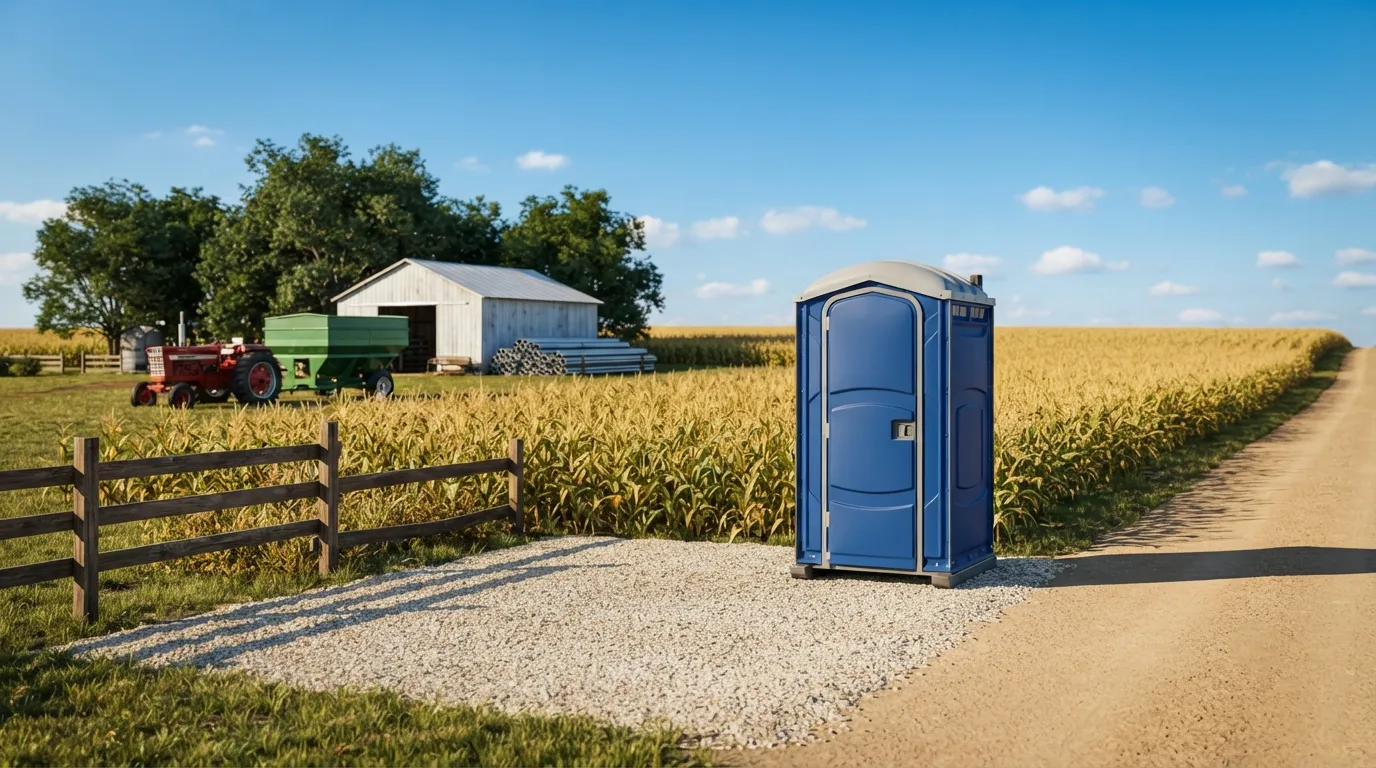
Placement on farmland is different from a job site. You need flat, stable ground, per ADA Standards 302.1 where accessible units are involved, and enough clearance for a service truck to reach the unit without driving through planted rows or livestock pens. A standard porta potty rental unit runs about 44 by 48 inches on the ground and stands roughly 92 inches tall, small enough to tuck at a field edge or fence line without eating usable acreage. Farms around Lake Charles often need units repositioned as harvest moves through different sections, and that is a routine part of the service, not an extra trip charge in most cases, so ask when you book. If your crew works near irrigation ditches or low spots that flood, we will steer you toward higher ground even if it adds a short walk, because a tipped unit costs more downtime than the extra fifty feet. Operations closer to Sulphur, 11.3 miles west of Lake Charles, or out toward Carlyss, 14.2 miles west, still fall inside our regular service loop, so distance from town does not change pricing or route reliability. For bigger crews during peak season, an ADA accessible porta potty may be worth adding: clustered single-user units require at least 5 percent accessible, and never fewer than one, per ADA Standards 213.2.
You can rent daily, weekly or monthly, and the longer terms are meant for exactly this kind of work. A monthly porta potty rental fits planting-through-harvest stretches better than repeated weekly bookings, since the monthly rate holds steady while a string of short rentals adds up faster. Here is how the standard unit compares by term:
| Duration | Typical Price |
|---|---|
| Day | $150 |
| Week | $200 |
| Month | $200 |
Septic and holding tank needs come up too, especially around dairy operations or ag buildings with fixed plumbing. A holding tank rental can bridge a barn or bunkhouse that lacks a working septic system, and if you already have a tank on site, how often to pump a septic tank is worth reading, since a typical residential-sized tank gets pumped every 3 to 5 years depending on tank size and household or crew load. Farms running a commercial kitchen or processing shed should also look at grease trap pumping; a grease interceptor needs pumping once fats, oils, grease and solids hit 25 percent of the liquid depth. For operations near Moss Bluff, 10.7 miles north of Lake Charles, or Westlake, 11.4 miles northwest, seasonal scheduling works the same way: lock in the month before harvest starts, not after crews are already in the field. Request a request a quote early if your season is tight.
OSHA 1928.110 sets the standard by distance, not headcount: one toilet within a quarter mile walk of hand-labor crews, generally figured at one facility per 20 workers. Larger crews spread across several fields need more than one unit placed strategically, not just more units at a single spot.
Yes. Field sanitation rules require potable water and handwashing along with toilets, and under 29 CFR 1910.141(d)(2) that means soap and towels or a dryer, not sanitizer alone. We pair handwashing station rental units with toilets on every ag job.
Yes, most rentals allow repositioning as work moves through a property. Tell us the rough path of the season upfront so we can plan driver routes, since fields near Prien, 7.3 miles southwest of Lake Charles, may need different access points than more remote acreage.
A standard unit carries a 60 to 70 gallon holding tank, enough for a crew over several working days before it needs servicing. Larger crews or longer gaps between visits may call for emergency porta potty rental as backup.
Generally yes, since the monthly rate is built for extended jobs like a full growing season. Check porta potty rental cost for a fuller breakdown of how day, week and month pricing compares across unit types.
Yes. Lake Charles Porta Pros delivers farm and agricultural restrooms across Lake Charles and the surrounding metro, with same-day and next-day drop-off available on most orders.
Pricing depends on the unit and how long you need it. See our cost breakdown and request a free quote for an exact figure.
Standard rentals include scheduled service — a pump-out, a clean, a restock and fresh deodorizer. Busy or hot-weather sites can be serviced more often.
Call now or request a free quote — clean units, on-time delivery, transparent pricing.